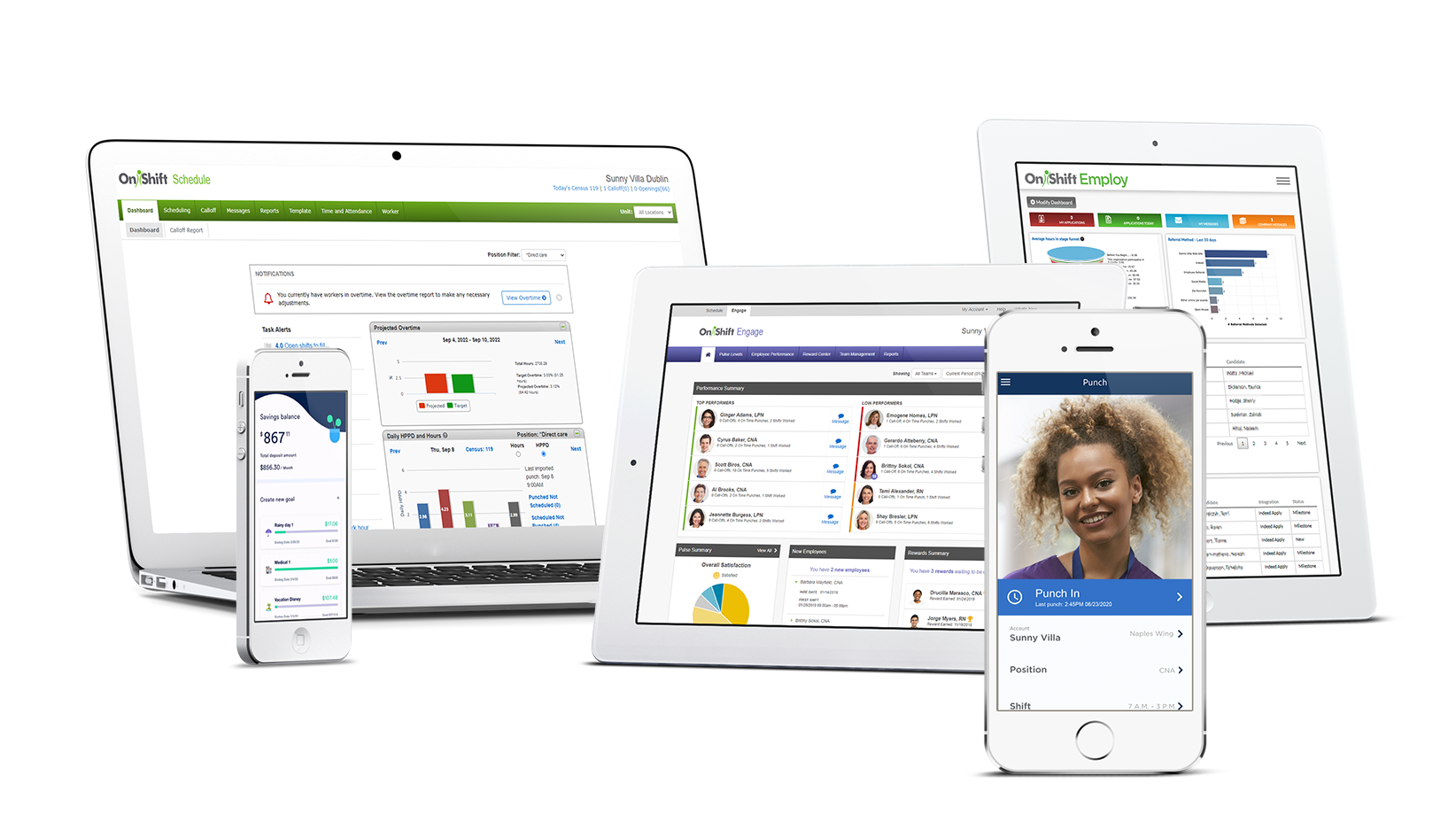
The demand for senior care services is rising fast — and so is the pressure on the people who deliver that care every day. During our recent webinar, Employee Engagement Reality Check: Real Strategies to Boost Retention and Morale in Senior Care, we brought together industry voices from OnShift, Payactiv, and Online Rewards to share what's actually moving the needle on engagement and retention. Here's what stood out.
1. Employee Engagement Is a Business Strategy, Not a Soft Perk
It's easy to treat engagement programs as a feel-good add-on. The data says otherwise. Short staffing creates a burnout spiral: remaining staff get overworked, call-offs increase, resignations follow — and the cycle repeats. Replacing a single caregiver can cost thousands of dollars when you factor in recruitment, onboarding, and training. A proactive engagement program doesn't just improve morale; it directly protects your bottom line.
Strong engagement also shows up in recruitment. When your community has a reputation for recognizing and supporting its staff, that becomes a genuine competitive advantage on every job posting.
2. Financial Wellness Is a Frontline Retention Tool
Over 80% of Americans live paycheck to paycheck. For hourly senior care workers, financial stress is a daily reality. When an employee is worried about an upcoming bill or whether they can fill their gas tank, they're not fully present for the residents they serve.
That's the problem earned wage access is built to solve. OnShift Wallet, powered by Payactiv, gives employees real-time access to wages they've already earned before payday. Organizations that have rolled out this benefit have seen a 36% improvement in retention, a 70% drop in payday loan usage among users, and a 16-hour productivity gain per employee. The mechanism is simple: when workers aren't in financial crisis mode, they can focus on the job.
It's also worth noting that earned wage access has a secondary effect on shift pickups. When employees can see their earned balance grow in real time inside the OnShift app — and they know they need a little extra for an upcoming expense — open shifts sitting right there in the same app become a direct path to a solution. OnShift data shows a 30–35% increase in shift pickups among communities using OnShift Wallet compared to those that don't.
3. Meaningful Recognition Beats Tchotchkes Every Time
Service-anniversary plaques. Giant foam numbers. Company logo trinkets. These physical awards are becoming the least desired form of recognition, especially among younger workers. If your rewards program is still built around objects that collect dust on a shelf, it may be time to rethink the strategy.
What resonates instead? Practical, useful rewards. A gift card that covers a tank of gas, a family dinner out, or groceries without anxiety means far more than any branded keepsake. Recognition programs built on points redeemable for e-gift cards — like those available through OnShift Engage’s automatic rewards program, powered by Online Rewards — let employees choose rewards that are actually meaningful to their lives.
And recognition doesn't have to be expensive. A handwritten thank-you note from a building leader, a VIP parking spot, a dedicated break room stocked with snacks — these gestures cost very little and land in a big way when they're specific and genuine.
4. Communication Is the Secret Sauce
This came up again and again throughout the webinar, from every panelist, in different ways. Employees want to feel heard. They want to know their feedback matters. They want to understand what benefits are available to them and feel supported in using them.
Pulse surveys — a core feature of OnShift Engage — give employees a voice and give leaders actionable data. Stay interviews (a structured check-in during employment, not just at the exit) help surface concerns before they become resignations. And simply communicating that benefits like earned wage access exist — and that using them is encouraged, not stigmatized — can dramatically improve uptake and the employee experience.
5. Technology Frees Up Leaders to Do the Human Work
The right technology shouldn't add to administrative burden — it should remove it. When scheduling, shift pickup incentives, surveys, rewards, and earned wage access all live in one platform, leaders spend less time behind spreadsheets and more time on the floor with their teams.
Technology should handle the majority of the administrative work so that leaders can spend their time actually getting to know their people — who just had a baby, who's saving up for something, who showed up and went above and beyond this week.
That personal knowledge is what turns a rewards program from a transactional exchange into a genuine culture. And it's what keeps good employees from looking elsewhere.
Where to Start
Whether you have a robust rewards budget or are working with limited funds, the principles are the same: make recognition personal, make benefits accessible, communicate consistently, and use technology to give yourself the space to show up for your people.
Watch the webinar on demand here. And if you want to get started on your own employee engagement strategy, contact us to learn how our software can help.